
How Mycelium Protein Is Grown: From Mushroom Spawn to Edible Fibres
This article explains how mycelium is grown through controlled fermentation to produce mycoprotein—a safe, efficient, fibre-rich protein with naturally developed texture. It shows how fungal fibres become a versatile, sustainable ingredient used in modern plant-based foods.
How They Make Mycelium Protein: Mushroom Protein Guide
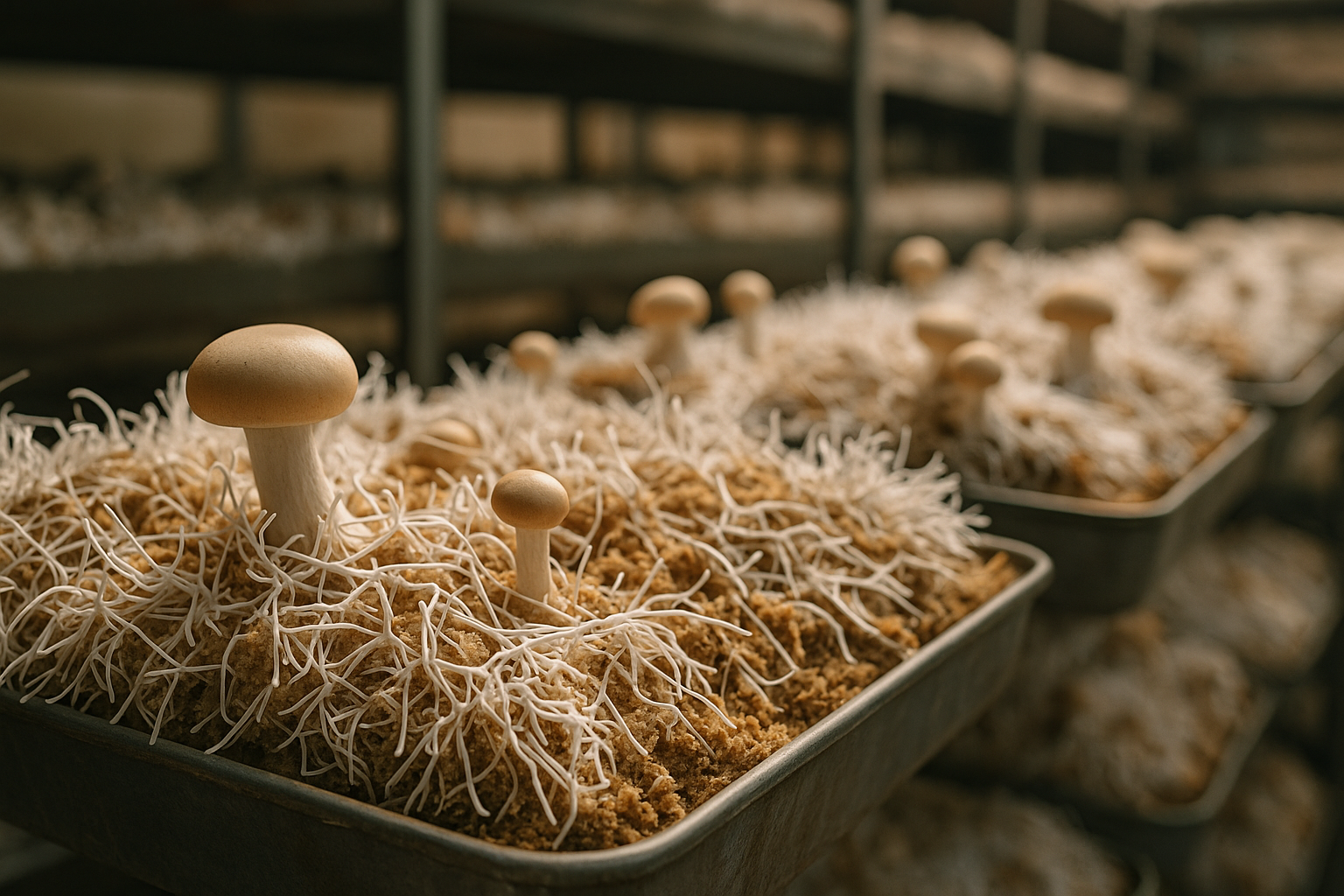
Mycelium-based foods are emerging as a significant development in plant based proteins. If you have ever tried mycoprotein and been surprised by its firm texture, you may have wondered how fungi can create something like this. The explanation lies in how mycelium grows and how fermentation strengthens it.
This guide explains the process and how mycoprotein becomes a reliable source of protein. For nutritional details, see the separate article on mycoprotein benefits.
What mycelium actually is
Mycelium forms the root-like network of fungi. Thin, branching fibres spread outward and absorb nutrients. In nature, these fibres support mushroom growth. In food production, a specific fungal strain is selected for texture, consistency and fibre structure.
Most commercial mycoprotein comes from Fusarium venenatum, a natural organism identified in the 1960s during research into efficient food production. It does not resemble mushrooms found in shops. Instead, it grows as a continuous web of fine fibres that expand quickly and evenly, creating a stable base for a food ingredient. Its long strands help mycoprotein achieve a texture similar to vegan meat.
The fibrous network formed by Fusarium venenatum becomes the structure of the final ingredient.
The role of mushroom spawn
Mushroom spawn serves as the starter culture for growing mycelium. It functions similarly to a yoghurt culture or a sourdough starter: a small initial amount that expands into a full batch.
The spawn contains a carefully maintained strain of Fusarium venenatum and is produced under controlled, sterile conditions to ensure predictable growth. Any external microbes can interfere with texture and safety, so consistency matters. Once prepared, the spawn enters a nutrient-rich environment and multiplies rapidly.
How fermentation turns mycelium into food
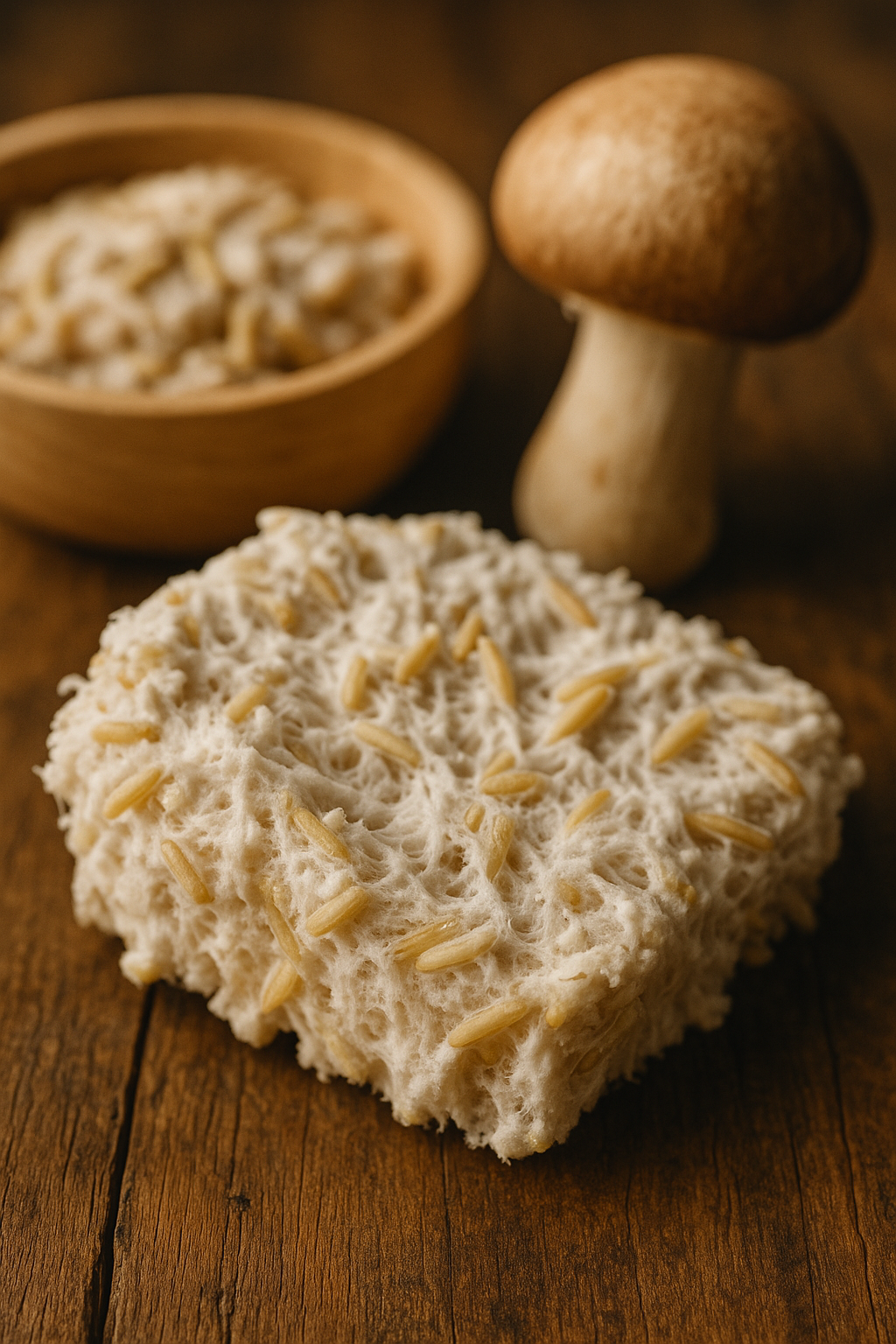
Fermentation drives most of the transformation. The process is similar to how yoghurt or bread develops. During fermentation, the organism receives carbohydrates, oxygen and controlled warmth. These conditions encourage it to expand into a cohesive mass.
During this stage:
- fibres extend and interconnect
- oxygen supports structure formation
- the mass becomes firm
- texture begins to appear naturally
When fermentation finishes, the mycelium is harvested and heat-treated. Heat treatment stops growth, ensures safety and prepares the mass for shaping. After heat treatment, we define the material as mycoprotein.
How texture develops naturally
A meat-like texture forms with little manipulation. Fibres grow, interlock and create layers that behave similarly to animal protein when cooked.
After heat treatment, the mass becomes firm and easy to shape. Manufacturers can form it into strips, cubes, crumbles or blended formats. Unlike many plant based proteins that rely on stabilisers or starches, mycoprotein develops texture through natural growth patterns.
How texture develops naturally
A meat-like texture forms with little manipulation. Fibres grow, interlock and create layers that behave similarly to animal protein when cooked.
After heat treatment, the mass becomes firm and easy to shape. Manufacturers can form it into strips, cubes, crumbles or blended formats. Unlike many plant based proteins that rely on stabilisers or starches, mycoprotein develops texture through natural growth patterns.
Why fermentation must stay controlled
Fermentation must remain consistent. Even small changes in temperature, airflow or acidity can influence growth. Producers monitor conditions closely to maintain stability.
Controlled environments ensure:
- safe development
- predictable texture
- consistent moisture
- reliable results
This precision is why mycoprotein maintains a uniform feel each time you buy it.
From fermentation to shaping
Producers shape the heat-treated mycelium mass into a range of ingredient styles. Its durable fibres allow them to use fewer additives than many other plant-based proteins.
Common forms include:
- strips
- pieces
- mince-like crumbles
- patties
- base mixes for bowls or sauces
This flexibility makes mycoprotein a frequent choice in ready meals and plant-based lunch dishes.
Why the process is environmentally efficient
Mycelium grows quickly and does not require farmland, grazing areas or long feeding cycles. The full fermentation process takes only a few days.
This improves efficiency in several ways:
- reduced land use
- lower energy demand
- lower water consumption
- smaller carbon footprint
Inputs go directly into producing edible protein. This is one reason mycoprotein is often compared with emerging organic protein alternatives, even though it is not certified organic.
Food safety and regulation
Mycelium grown through controlled fermentation offers consistency and predictability. Fusarium venenatum, the strain used for most mycoprotein, has been researched for decades and evaluated for safety across multiple regions. It has been approved for food use since the 1980s and remains regulated under modern standards.
Although mycoprotein is not labelled as organic protein, many consumers choose it because the process uses minimal additives and produces a stable, high-quality ingredient.
Did this change your view of mycelium?
Understanding how mycelium grows removes much of the mystery behind it. Instead of seeming unfamiliar, it can be seen as a natural ingredient created through a process similar to yoghurt or bread.
When you see mycoprotein in ready meals or bowls, its structure reflects the way the organism forms during fermentation. This knowledge makes it easier to evaluate plant based proteins without needing detailed scientific background.
Join us on social media to stay inspired with new recipes, helpful tips, and the latest news from our kitchen