
How We Make Our Bowls: From UK Farms to Our London Kitchen
This article explains how our bowls are made—from UK farm sourcing and strict quality controls to small-batch cooking in our London kitchen. Local ingredients, careful preparation and strong safety standards ensure fresh, consistent, plant-forward meals that fit everyday routines.
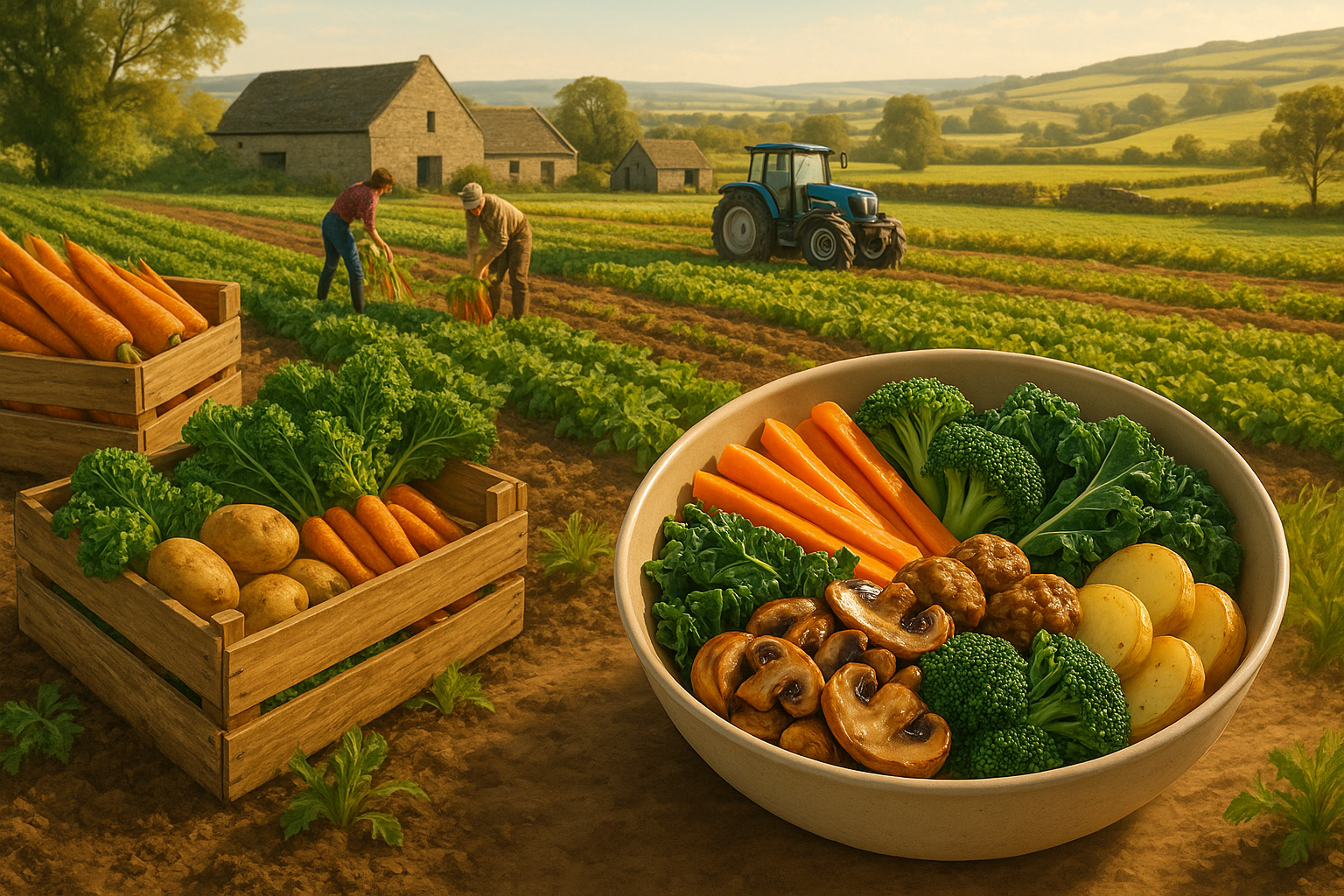
Our fresh & local sourcing philosophy
Every bowl begins with a simple principle: use clean, recognisable ingredients that support balanced eating. Customers who look for healthy food near me often want meals made from fresh produce and clear ingredient lists. To meet this expectation, we prioritise UK-grown vegetables, reliable farming partners and short transport routes. Local sourcing helps maintain flavour and texture, and it allows ingredients to move into production quickly after harvest.
Freshness is more than a preference. It affects how vegetables cut, cook and cool, and it shapes how stable a finished bowl feels when eaten at home, in the office or on the move. These factors make sourcing an essential part of food production for meals that must remain consistent throughout the week.
Choosing UK farming and veg suppliers
Our suppliers form the foundation of each bowl. We work with UK growers who focus on consistent harvest cycles and responsible farming practices. This includes soil management, crop rotation and methods that protect the quality of produce without relying on intensive treatments. These choices help us support local growers while giving customers confidence in their ingredients.
Because many people choose vegetarian food and plant-forward meals for daily eating, vegetables form the core of most bowls: carrots, courgettes, cucumbers, mixed salad leaves, herbs and seasonal additions when they align with our preparation needs. Working with UK farms makes it easier to plan stable supply throughout the year. It also helps reduce long-distance transport, supporting both product quality and predictable preparation timing.
We also choose partners who understand the requirements of bowl-style meals. Consistent size, moisture levels and flavour intensity matter when vegetables must be cut, cooled and packed quickly. The right suppliers help us maintain that level of consistency.
Quality standards & certifications
Quality control runs through the entire supply chain. Our suppliers follow recognised UK standards for safety and handling. This includes certifications for hygiene practices, storage procedures and production methods. These standards ensure that ingredients meet strict requirements before they reach our facility.
Each delivery is assessed on arrival. We check appearance, temperature, aroma and firmness. Produce that meets the standard moves directly into cleaning and preparation. Anything outside specification is removed from the batch.
These checks are essential because customers who choose healthy food expect freshness and clarity. When standards stay consistent, the final bowls offer reliable taste and structure.
Transporting ingredients from farms to London
Transport affects quality as much as sourcing. Ingredients move in temperature-controlled vehicles to protect freshness and maintain texture. Vegetables that wilt, soften or lose moisture do not perform well in bowl formats, especially when they need to cool quickly after cooking.
Short transport routes allow produce to arrive soon after harvest. This supports clean cutting, predictable cooking behaviour and balanced flavour. Our transport partners follow set timelines to ensure ingredients reach the London kitchen within specific windows. These timeframes prevent unnecessary delays and preserve the natural qualities of each ingredient.
Transport also influences the appeal of vegan food, where freshness and texture shape overall satisfaction. When the supply chain runs smoothly, the final dish reflects the quality of its starting point.
Inside our London kitchen facility
Once ingredients reach the facility, the preparation process begins immediately. The layout is designed to support food safety, efficient movement and clear separation between raw and cooked items. Every stage is guided by established standards for food production.
Vegetables move through washing, peeling and cutting. Each step follows controlled procedures to maintain knife precision and reduce moisture loss. Grains and bases are cooked in measured batches to keep texture consistent. Dressings are blended in controlled conditions to maintain clean flavour and uniform viscosity.
The facility uses equipment chosen for reliability rather than scale. Smaller batch sizes allow closer monitoring and help avoid over-processing. This approach supports the final quality and ensures each bowl tastes as intended.
Cooking & small-batch preparation
Cooking shapes the final structure of each ingredient. Carrots remain firm but tender, courgettes soften without losing shape and grains hold their structure after cooling. These details matter because bowl components must work together without becoming soft or heavy during cooling.
Small batches help maintain these qualities. Each batch is checked for flavour, texture and colour before moving on. If something does not align with the expected profile, it is adjusted or replaced.
This method supports customers who rely on bowls as part of food to go routines. Meals must remain stable through transport, storing and reheating. Balanced preparation helps bowls hold their form while remaining easy to mix and eat.
Safety, hygiene & compliance
Safety is integrated into every part of the process. The facility follows UK hygiene regulations, local audits and internal standards. Staff complete required training and work within monitored zones that track temperature, handling practices and cleaning cycles.
Raw and cooked ingredients never overlap. Surfaces are sanitised between tasks, and cooking equipment is calibrated regularly. Cooling happens in controlled steps to ensure meals reach safe temperatures within the required time. These procedures protect customers and preserve the intended flavour of each bowl.
People who choose vegan food, vegetarian food, or plant-based bowls often do so for health and wellbeing. Safety controls help maintain the confidence that ingredients are handled carefully from start to finish.
Cooling, sealing & final checks
Once ingredients are cooked, they move to cooling areas where airflow and temperature are regulated. Proper cooling protects texture and ensures dishes remain safe throughout their shelf life. After cooling, bowls are assembled in layers that remain stable during storage and transport.
Sealing is the final protective step. Lids are applied under monitored conditions to maintain freshness. Printed labels provide clarity on content and handling instructions.
Before leaving the facility, each batch undergoes a final review. The team checks weight, appearance, temperature and packaging quality. This consistency is important for meals that appear in the healthy food near me category, where customers expect predictable structure and freshness.
Join us on social media to stay inspired with new recipes, helpful tips, and the latest news from our kitchen