Is Mycoprotein Healthy? Full Nutrition Profile of Fermented Mushroom Protein
Mycoprotein is a nutritious, fibre-rich, low-fat protein made from mycelium. This article explains its health benefits, safety, and how it compares to other plant-based proteins, helping you understand why it fits well into balanced, everyday meals.
Is Mycoprotein Healthy? Nutrition Breakdown
When you see mycoprotein on a label, it can seem like another unfamiliar ingredient in today’s food landscape. You might already buy vegan meals or simply prefer something lighter that keeps you full without slowing you down. Either way, the question is reasonable: is it good for you?
This article focuses on the nutrition side of mycoprotein. Production steps and fermentation technology are covered separately. Here, you’ll see what mycoprotein contributes nutritionally and how it fits into everyday meals.
What mycoprotein actually is
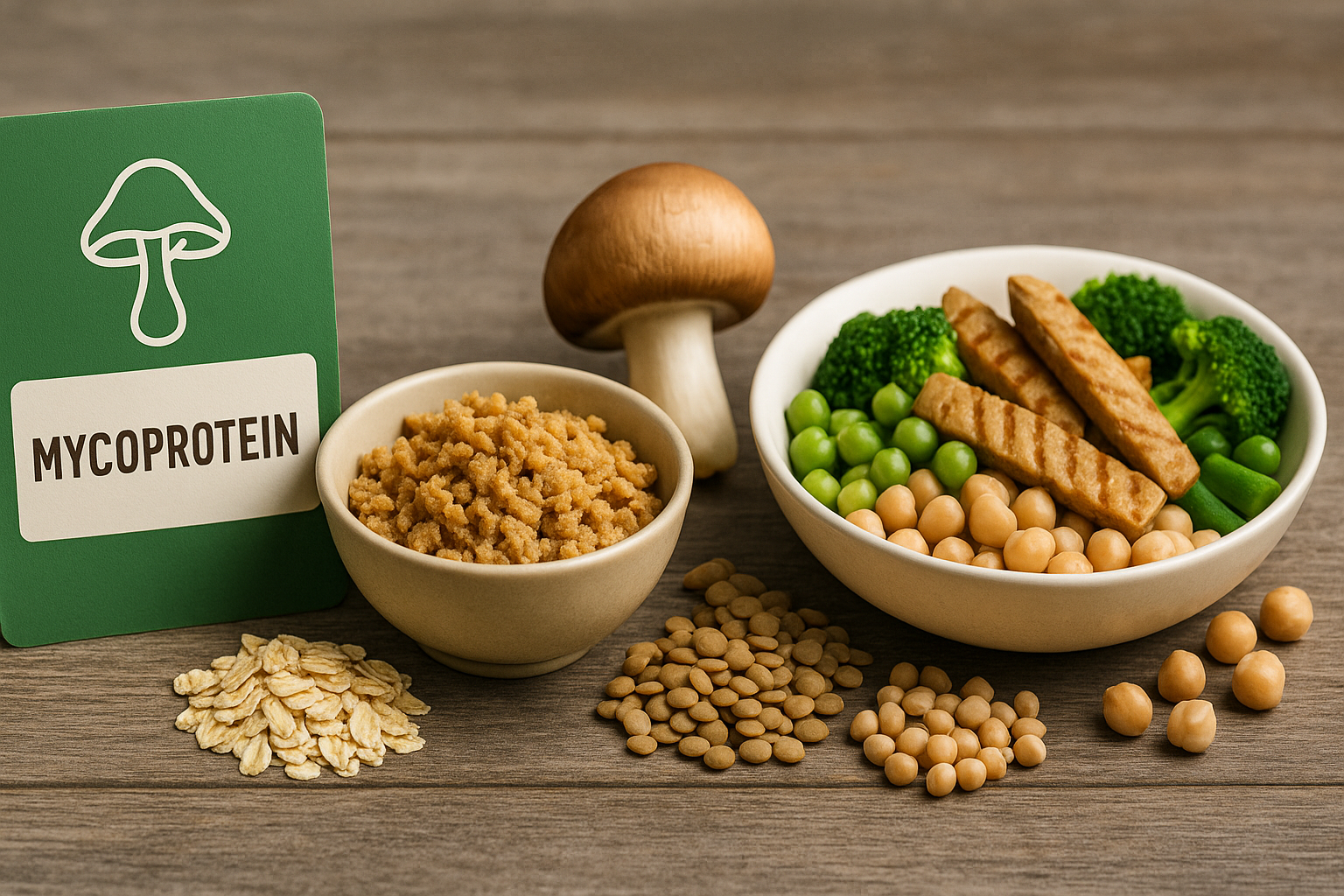
Mycoprotein is a protein-rich ingredient made from mycelium, the root-like network of a specific microscopic fungus. In practical terms, it is a mushroom-based protein, although it doesn’t come from the mushroom caps sold in stores. Most commercial mycoprotein is grown from Fusarium venenatum, a species known for forming long, naturally fibrous strands ideal for food.
During production, the mycelium is grown, heat-treated and shaped into small pieces or larger blocks suitable for many cooking styles. It is commonly used in products that resemble vegan mince or strips. Its natural fibre structure helps it behave more like a whole food than an isolated protein powder.
Why mycoprotein works well as a protein source
When choosing a protein, people usually focus on three things: whether it supports fullness, whether it contributes to steady energy and whether it benefits the body overall.
Mycoprotein performs well across all three. It provides a substantial amount of protein per portion, comparable to many other plant-based proteins. Protein is built from amino acids, which support muscle repair, recovery, hormones and general maintenance.
You don’t need to know the full amino acid profile to benefit from it. What matters is that mycoprotein offers meaningful, easy-to-use protein that fits naturally into balanced meals.
The fibre part most people don’t think about
One of the biggest advantages of mycoprotein is its fibre content. Most animal proteins contain no fibre at all, and many plant proteins vary. Mycoprotein naturally contains fibre as part of its structure.
For you, this leads to clear advantages:
- you stay full for longer
- digestion tends to feel more comfortable
- energy levels remain steadier after eating
If you’ve ever had a heavy lunch that left you tired soon after, you already understand the impact of fibre and protein together. Meals that include both usually support energy more consistently than options based on low-fibre ingredients.
Fat and saturated fat: where mycoprotein fits
Another reason people look at mycoprotein is its fat content. If you aim to support long-term health, limiting saturated fat is generally recommended.
Mycoprotein is naturally low in fat and especially low in saturated fat. This does not make it a “diet food”; it simply means it fits into meals that are filling without being greasy. Compared with vegan meats designed to imitate beef and often relying on added oils, mycoprotein typically requires less additional fat to feel satisfying.
Where vitamin B12 comes into the picture
Vitamin B12 is essential for energy, the nervous system and the formation of red blood cells. Because B12 does not naturally occur in plant foods, many plant-based products are fortified.
Mycoprotein itself is not a natural source of vitamin B12, but foods containing mycoprotein are often enriched. This is standard for plant-forward ready meals. If you eat these meals often, it’s helpful to check labels to ensure you’re covering this nutrient.
Is mycoprotein safe to eat?
The word “fungus” can make some people hesitant, even if they regularly eat mushrooms. It is entirely reasonable to pause and wonder whether a food made from mycelium is unusual or risky.
Mycoprotein, including products grown from Fusarium venenatum, has been used for many years and is considered safe for most people. A very small number of individuals may be sensitive to fungal ingredients, similar to reactions to nuts, dairy or soy. If you know you respond strongly to moulds or fungi, paying attention to your body’s signals makes sense. For the majority of people, mycoprotein is well tolerated.
If you’d like to understand the growing and fermentation stages, the separate article on mycelium production explains the details. For everyday use, the important point is that this ingredient is regulated and has a long history of safe consumption.
How mycoprotein compares to other plant-based options
You may already be familiar with vegan meats and other plant proteins. Without repeating categories explained elsewhere, here is a simple nutrition-focused comparison.
- Compared with many soy-based options, mycoprotein stands out for its fibre content and lighter feel after eating.
- Compared with wheat-based proteins, it is naturally free from gluten, which matters if you avoid it.
- Compared with vegetable or grain mixes, mycoprotein often provides more protein per serving while still contributing fibre.
This doesn’t make it the “best” in every situation, but it helps explain why it appears frequently in modern high-protein meals.
A simple way to judge a mycoprotein meal
When you pick up a meal containing mycoprotein and want to understand whether it aligns with your idea of “healthy,” you can look at a few factors:
- protein per portion: will it support fullness?
- fibre: does it contribute to digestion and steady energy?
- saturated fat: is it kept at a reasonable level?
- ingredients: does the list appear straightforward and free from unnecessary additions?
These quick checks help you evaluate a meal without needing in-depth nutrition knowledge.
What this means for your everyday eating
Mycoprotein is a practical, nutrition-focused choice if you prefer meals that feel lighter than meat, supply real protein, offer fibre and keep saturated fat low. It fits naturally into both plant-based diets and more flexible eating habits where you want better lunches a few times a week.
You don’t need to change your entire routine to benefit from it. Even small adjustments, such as choosing a mycoprotein-based meal instead of a heavier one, can noticeably influence how you feel during the day.
Join us on social media to stay inspired with new recipes, helpful tips, and the latest news from our kitchen