What Are Vegan Meat Alternatives Today? From Mycoprotein to Vegan Mince
Explore the world of modern protein innovation—from mycelium and plant-based meats to whole-food alternatives. This guide breaks down nutrition, sustainability, processing, and health insights to help consumers choose smarter, cleaner, and more future-focused protein options.
Vegan Meat Alternatives Today: A Simple Guide
If you want to eat healthier, try eating less meat. You can also look for a lunch that helps you stay awake. Vegan meat alternatives are quickly appearing on supermarket shelves. One box looks like vegan mince. Another looks like plant-based chicken. The last one is made from mushroom protein. Now, you might be wondering what all of this really means.
Before you decide what to include in your next bowl or lunch, it helps to know the basics: what these products are, how they differ and why so many people buy them today.
What counts as a vegan meat alternative
A vegan meat alternative is any food designed to replace meat in flavour, texture or protein. Some look remarkably similar to beef or chicken. Others use whole-food ingredients shaped for bowls, wraps or quick meals.
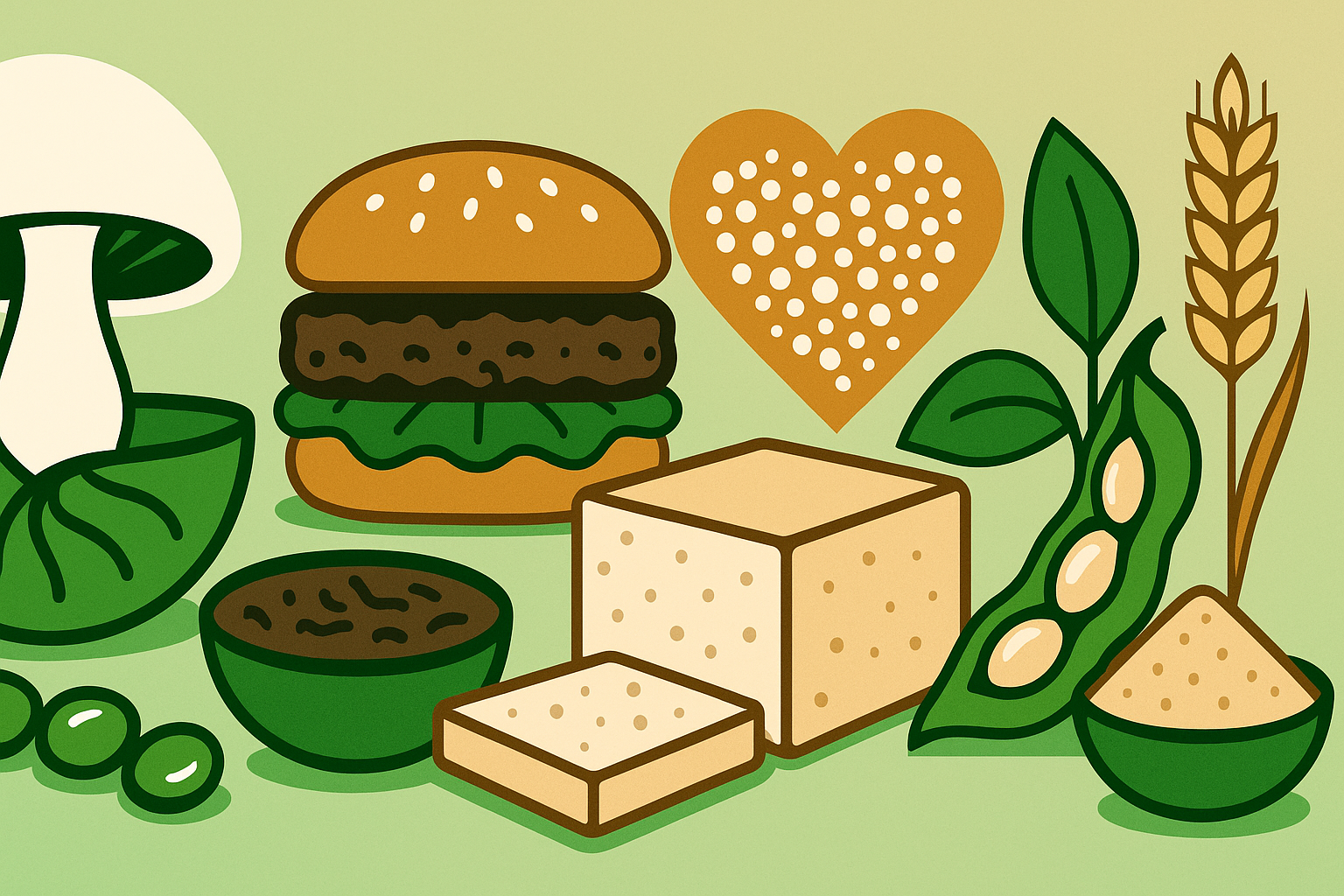
Most products fall into four main categories:
- soy-based proteins
- wheat-based proteins
- mycoprotein (a fermented mushroom-derived protein)
- vegetable- or grain-based blends
Each category exists for a reason — different lifestyles demand different types of proteins.
Soy-based alternatives: the classic option
Soy has been part of plant-based eating for decades. Tofu, tempeh and soy-based vegan mince are familiar, protein-rich and simple to cook. Soy contains all essential amino acids, which is why people have chosen it as a go-to option for so long.
But soy isn’t the right fit for everyone. Some people avoid it for reasons like taste, digestion or personal preference, which is why the market has expanded beyond soy-only options.
Wheat-based proteins: texture first
Wheat protein, often known as seitan, is popular for its firm, chewy texture. It works well in dishes where you want a meat-like bite.
The main limitation is obvious: if you avoid gluten, this category won’t work. Wheat protein also isn’t a complete protein on its own, so people often combine it with legumes or grains for better nutritional balance.
Mycoprotein: the new generation of plant-based protein
Mycoprotein is one of the most exciting new options in modern alternative proteins. It comes from the root structure of mushrooms and is made through fermentation — a natural process similar to how yogurt or sourdough develops.
People choose it because it offers a combination that’s hard to find elsewhere:
- naturally high in protein
- rich in fibre for stable energy
- low in fat
- soy-free
- made with minimal processing
- environmentally efficient
Many consumers compare its texture to vegan mince — firm, versatile and satisfying without feeling heavy.
If you want to know how mycoprotein is grown or what mushroom spawn is, check out the detailed articles later in the series. This one keeps the overview simple to avoid overlap.
Vegetable and grain blends: simple, recognisable ingredients
Some vegan alternatives skip the “meat-like” idea completely. Instead, they use ingredients you already recognise from everyday cooking: lentils, chickpeas, peas, quinoa or ancient grains.
These options are great for anyone looking for meals that feel close to home cooking — lighter, minimally processed and naturally high in fibre. They also fit well with bowl-style eating, where you want flavour, balance and energy rather than heaviness.
Are vegan meat alternatives ultra processed foods?
The term “ultra processed foods” appears everywhere, and it often leads to confusion. Here’s the simplest way to understand it:
Products made mostly from whole foods like lentils, vegetables, grains and mushroom protein often have short ingredient lists. They also contain few additives. Products designed to mimic meat closely often include binders, stabilisers or specialised fats to copy texture and flavour. That doesn’t mean all processed foods are unhealthy. What really helps is getting a basic sense of the product and checking that the salt, fats and overall ingredients look reasonable to you.
Why vegan meat alternatives became so popular
You don’t have to be vegan to eat vegan meals. In the UK, only a small part of the population follows a strict vegetarian diet, yet a much larger share eats plant-based meals weekly. They do it for reasons that might sound familiar:
- wanting a lighter lunch that doesn’t slow you down
- trying new ingredients like mycoprotein
- reducing meat without restricting themselves
- focusing on sustainability
- choosing food that cooks quickly and fits a busy schedule
Vegan meat alternatives grew rapidly because they solve everyday problems, convenience, nutrition, variety and environmental concerns, without requiring a full lifestyle change.
A quick way to make the right choice
When you explore vegan meat alternatives, the best approach is to understand what each type offers.
Some products aim for a familiar meat-like experience. Others focus on whole-food ingredients. Newer options, such as mycoprotein, try to combine texture with a cleaner, lighter nutritional profile. Once you see these intentions, it becomes easier to choose what suits your day. You can pick something comforting, something light or something high in protein.
Vegan meat alternatives are diverse for a reason. And now that you know what each type represents, the shelf starts feeling far less confusing.
Join us on social media to stay inspired with new recipes, helpful tips, and the latest news from our kitchen